
 Deepfakes are becoming more convincing than ever. Whether manipulated media or entirely generated by artificial intelligence (AI), deepfakes can now realistically alter faces and clone voices. They can even fabricate entire scenarios across video, audio, and text. Unfortunately, these developments now create significant challenges, and people can no longer trust what is presented online. Methods that have in the past been used to detect less-perfect deepfakes are becoming obsolete. There is now an urgent need to develop more effective detection solutions.
The Escalating Threat
Deepfakes are being actively used in malicious ways. It is being used to fuel misinformation, enable new forms of fraud, and erode the foundations of digital trust. An Identity Fraud Report 2024 by Sumsub noted a four times increase in the number of deepfakes detected worldwide from 2023 to 2024. A research study by iProov tested 2,000 UK and US consumers, revealing that only 0.1 percent of the participants accurately distinguished between real and fake content. These are only a few statistics on the severity of the deepfake problem.
Limitations of Current Detection
There are various tools and technologies available for detecting deepfakes, ranging from manual forensic analysis to automated AI-based solutions. These methods rely on identifying issues such as inconsistencies in blinking patterns, facial warping, extra limbs, or audio glitches. However, new AI models creating deepfakes have advanced to minimize these problems.
Therefore, relying on known flaws to detect deepfakes is not a sustainable strategy in an ever-evolving landscape.
Innovations in Detection Modalities and Speed
Innovation in deepfake detection requires an approach that will address the complexity and diverse nature of modern synthetic media. The new innovations must move beyond analyzing just one type of media.
- Multi-Modal Detection – The latest deepfakes are multi-modal and can manipulate video, audio, and even accompanying text simultaneously. Therefore, detection software must have the capability to analyze these elements together.
- Focus on Voice and Audio – This is especially crucial in detecting sophisticated voice deepfakes used in scams. New software is being built to analyze subtle vocal characteristics, background noise inconsistencies, and even speech patterns in combination with any available video to verify authenticity.
- Real-Time and Scalable Solutions – There is a need for advanced systems that can detect deepfakes quickly and efficiently in livestreams and large volumes of content. Detection system developers must develop algorithms and infrastructure capable of this speed and scale.
Advancements in AI for Deepfake Detection
AI is playing a major role in the development of next-generation detection software that is beyond simple artifact detection to more sophisticated analysis.
- Leveraging Foundation Models – Researchers are exploring large, pre-trained AI models that are behind many generative tools. Since these models are trained with vast amounts of data, they understand natural media. They can be fine-tuned and incorporated into detection software to help spot deviations that indicate synthetic origin.
- Proactive and Generative Approaches – Some innovations are proactive, where generative models are being used to understand how fakes are made. This will allow detectors built into software platforms to anticipate and identify novel manipulation techniques even before they become widespread.
- Towards more Robust and Explainable AI – Software development is also focusing on robustness against adversarial attacks. New training methods are being implemented to make detection software more resilient to deliberate attempts at evasion. There is also a push for Explainable AI (XAI) within detection software. This will help users understand why a piece of media was flagged.
Authentication and Verification Beyond Pure Detection
Advanced detection is bound to be challenged; therefore, next-generation solutions are incorporating methods for authentication and verification built into software systems.
- Blockchain and Media Provenance – Exploring how blockchain technology can be utilized to create immutable records of media origin and any subsequent changes.
- Human Element and Crowd-Sourcing – Integrating human expertise as a judgment of human expertise will help in complex cases. Crowd-sourcing expertise is also being explored as a way for platforms to scale human review.
- Detecting Deepfakes in New Frontiers – As digital interactions move into new spaces like virtual worlds and the metaverse, detection software for these platforms is also necessary. This will help identify manipulated avatars and synthetic content within the immersive environments.
- International Collaboration and Standards — fighting deepfakes is a global challenge, as synthetic media can easily spread worldwide. Therefore, collaboration among international researchers, governments, and technology companies is crucial. To accelerate the development and deployment of effective countermeasures, the involved parties can share data on new deepfake techniques and detection methods, as well as common technical standards.
- Public Awareness and Digital Literacy – educating the public on how deepfakes are created and what to look for empowers them not to be duped by fakes. Promoting digital literacy helps people evaluate online content more skeptically and understand the importance of verified sources.
Conclusion
The race between deepfake generation and detection will undoubtedly continue. The ongoing development and deployment of sophisticated detection software is an important step toward safeguarding the integrity of digital media and preserving trust in everyday digital interactions. To deal with the escalating deepfake threat, passive defense is insufficient. Therefore, it is recommended to prioritize adopting integrated, next-generation detection software and verification methods to safeguard operations and trust.




 Bad debt expense is an important concept that businesses must account for when it comes to their financial reporting. Regardless of the timeframe a company accounts for, it helps companies determine what portion of their receivables are collectible and what portion are not – and therefore, a bad debt expense. Depending on the receivables’ amount, this bad debt expense can take the form of either the allowance method or the direct write-off method.
 When it comes to the risk of default, Moody’s found that during COVID-19, American businesses had a 7.8 percent chance of defaulting. This is compared to a low of 4 percent in 2021, but lower than the current 9.2 percent risk of default, according to a March 2025 report by the rating agency.
 Providing for congressional disapproval under chapter 8 of title 5, United States Code, of the rule submitted by the Department of Energy relating to “Energy Conservation Program: Energy Conservation Standards for Consumer Gas-Fired Instantaneous Water Heaters (HJ Res. 20) – The House and Senate both passed a resolution negating a previous rule mandating that tankless gas-fired water heaters meet certain criteria (less than 2 gallons capacity and greater than 50,000 Btu/hour) for efficiency standards, which would have phased out non-condensing technologies. Introduced by Rep. Gary Palmer (R-AL) on Jan. 15, the resolution is awaiting signature by the president.
 Marriage isn’t just about two people who fall in love and choose to spend the rest of their lives together. It is also a contract. And while that contract might not be forever binding, marriage does come with certain financial and familial obligations regardless of whether the couple stays married or not.
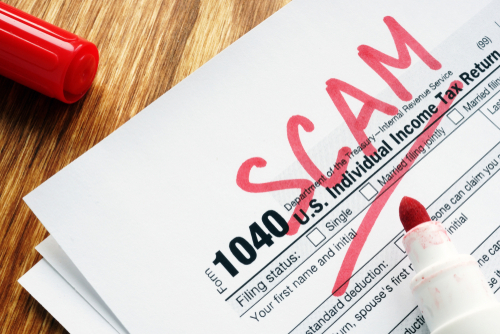 As tax filing season begins, scammers are ramping up efforts to steal taxpayers’ personal information through increasingly sophisticated schemes. Below, we discuss the latest scam, what to look out for in general, and what to do if you suspect something malicious.
 Of all the things you teach your kids when they’re young, saving money just might be one of the most important. Teaching them to delay gratification could help them avoid unnecessary spending and help them learn to value controlling their money. Here are some tips you can use to educate them about this crucial life skill.
 The Trump Administration announced it will no longer apply the beneficial ownership information (BOI) requirements of the Corporate Transparency Act (CTA) to domestic companies. This declaration came first via social media, marking a significant shift in policy.
 The Basics of Tax Reporting in Legal Settlements
 Competition in business today has become fierce. Each organization is constantly looking for innovative ways to form strong relationships with its customers. Loyalty programs have been used for a long time to build a devoted customer base. As technology advances, new technologies like Web3 are emerging, offering more opportunities to revolutionize loyalty programs, build vibrant communities, and deepen customer engagement.