It’s been nearly half a year since Americans first became widely aware of the coronavirus contagion within the United States. While for a brief month it looked as if we had the virus in hand, since then it has spread wildly out of control in many areas.
People who did not suffer dramatic financial consequences in the early stages of the pandemic could see some hard days ahead. For this reason, it’s a good idea to become familiar with the new relaxed rules associated with withdrawals from tax-advantaged retirement plans.
In late March, Congress passed the Coronavirus Aid, Relief and Economic Security Act (CARES Act). This bill offered provisions related to distributions from retirement accounts such as an IRA or 401(k). One of the key goals was to enable workers to make penalty-free withdrawals from a retirement plan to help sustain them while out of work due to the coronavirus.
To be eligible to make penalty-free withdrawals, plan participants must meet one of the following criteria:
The account owner, spouse or a dependent is diagnosed with COVID-19
The account owner experiences one of the following financial consequences due to the virus:
Furloughed
Laid-off
Work hours reduced or place of business closed (including for self-employed)
No access to childcare
Quarantined
The Act stipulates that workers can self-certify that they meet at least one of the criteria. Be aware, however, that if it is later discovered that the account owner did not meet the criteria for a coronavirus-related distribution, he might be required to pay the early withdrawal penalty.
Also note that while this penalty is waived for qualified workers, they must still pay income taxes on the amount withdrawn. However, there are a few ways to mitigate the income tax burden on those withdrawals. The first is to through a regular distribution. These are the parameters:
You have up until Dec. 30, 2020, to make a distribution
The total aggregate limit is $100,000 from all plans and IRAs
The distribution waives the 20 percent income tax withholding requirement
Income taxes will be due when filing a 2020 tax return
Retirement account owners who no longer work for an employer are free to take a distribution
Current employees may take a distribution only if the employer plan allows for a hardship or in-service distribution (note that the CARES Act permits employers to amend plan documents to allow coronavirus-related distributions)
While a retirement plan distribution does trigger income taxes for the tax year withdrawn, you can spread the tax burden out over three years. For example, let’s say you withdraw $18,000 this year. You may report the full amount as income on your 2020 tax return; or you can claim $6,000 a year on your 2020, 2021, and 2022 returns. This strategy reduces the chances of bumping your income into a higher tax bracket.
The second way is to pay the distributed amount back into your retirement plan. Initially, you will have to pay income taxes on the amount withdrawn. However, if you pay it back within three years, you can file to get the taxes you paid refunded. One caveat with this plan is that eligible retirement plans will treat repayment of this type of distribution as a rollover event for tax purposes. Be aware that if the retirement plan does not accept rollover contributions, it is not required to change its terms for this purpose.
Your third option is to withdraw money as a loan if your employer permits loans from the retirement plan. This is another scenario in which you must repay that money within a specified time period. You do not have to pay income taxes on the loan, but you do have to pay interest on the amount borrowed. The good news is that the interest you pay also goes into your account.
Under normal circumstances, retirement account loans are limited to $50,000 or 50 percent of the account balance, whichever is less. But for a coronavirus loan, you may borrow up to 100 percent of your vested balance or $100,000, whichever is less. You will need to repay that loan within the plan’s stated repayment period, although the CARES Act gives 2020 borrowers an additional year to repay this type of loan from an eligible retirement plan. Be aware though that you’ll owe both income taxes on the outstanding balance and the penalty for withdrawals made before age 59½ if you do not repay that loan in time.
Note that these CARES Act provisions are available only for the first 180 days after the Act was passed, which was on March 27, 2020. As Congress debates new legislation to aid struggling Americans suffering from the pandemic, this provision could be extended.
Borrowing From Your Retirement Plan: New CARES Act Rules
August 1, 2020 · Blog, Financial Planning
⏱ 4 min read
It’s been nearly half a year since Americans first became widely aware of the coronavirus contagion within the United States. While for a brief month it looked as if we had the virus in hand, since then it has spread wildly out of control in many areas.
People who did not suffer dramatic financial consequences in the early stages of the pandemic could see some hard days ahead. For this reason, it’s a good idea to become familiar with the new relaxed rules associated with withdrawals from tax-advantaged retirement plans.
In late March, Congress passed the Coronavirus Aid, Relief and Economic Security Act (CARES Act). This bill offered provisions related to distributions from retirement accounts such as an IRA or 401(k). One of the key goals was to enable workers to make penalty-free withdrawals from a retirement plan to help sustain them while out of work due to the coronavirus.
To be eligible to make penalty-free withdrawals, plan participants must meet one of the following criteria:
The account owner, spouse or a dependent is diagnosed with COVID-19
The account owner experiences one of the following financial consequences due to the virus:
Furloughed
Laid-off
Work hours reduced or place of business closed (including for self-employed)
No access to childcare
Quarantined
The Act stipulates that workers can self-certify that they meet at least one of the criteria. Be aware, however, that if it is later discovered that the account owner did not meet the criteria for a coronavirus-related distribution, he might be required to pay the early withdrawal penalty.
Also note that while this penalty is waived for qualified workers, they must still pay income taxes on the amount withdrawn. However, there are a few ways to mitigate the income tax burden on those withdrawals. The first is to through a regular distribution. These are the parameters:
You have up until Dec. 30, 2020, to make a distribution
The total aggregate limit is $100,000 from all plans and IRAs
The distribution waives the 20 percent income tax withholding requirement
Income taxes will be due when filing a 2020 tax return
Retirement account owners who no longer work for an employer are free to take a distribution
Current employees may take a distribution only if the employer plan allows for a hardship or in-service distribution (note that the CARES Act permits employers to amend plan documents to allow coronavirus-related distributions)
While a retirement plan distribution does trigger income taxes for the tax year withdrawn, you can spread the tax burden out over three years. For example, let’s say you withdraw $18,000 this year. You may report the full amount as income on your 2020 tax return; or you can claim $6,000 a year on your 2020, 2021, and 2022 returns. This strategy reduces the chances of bumping your income into a higher tax bracket.
The second way is to pay the distributed amount back into your retirement plan. Initially, you will have to pay income taxes on the amount withdrawn. However, if you pay it back within three years, you can file to get the taxes you paid refunded. One caveat with this plan is that eligible retirement plans will treat repayment of this type of distribution as a rollover event for tax purposes. Be aware that if the retirement plan does not accept rollover contributions, it is not required to change its terms for this purpose.
Your third option is to withdraw money as a loan if your employer permits loans from the retirement plan. This is another scenario in which you must repay that money within a specified time period. You do not have to pay income taxes on the loan, but you do have to pay interest on the amount borrowed. The good news is that the interest you pay also goes into your account.
Under normal circumstances, retirement account loans are limited to $50,000 or 50 percent of the account balance, whichever is less. But for a coronavirus loan, you may borrow up to 100 percent of your vested balance or $100,000, whichever is less. You will need to repay that loan within the plan’s stated repayment period, although the CARES Act gives 2020 borrowers an additional year to repay this type of loan from an eligible retirement plan. Be aware though that you’ll owe both income taxes on the outstanding balance and the penalty for withdrawals made before age 59½ if you do not repay that loan in time.
Note that these CARES Act provisions are available only for the first 180 days after the Act was passed, which was on March 27, 2020. As Congress debates new legislation to aid struggling Americans suffering from the pandemic, this provision could be extended.
Disclaimer
These articles provide general information on tax, accounting, and financial topics for small businesses and individuals. They are educational in nature and are not specific legal, accounting, financial, tax, or other professional advice, and should not be relied upon as such. This content was prepared by Service2Client and may have been reviewed or edited by the website owner for accuracy and compliance. Look for a trust mark below for verification details. No representation is made that any approach described will achieve a particular result, and no regulatory or professional body has reviewed or endorsed this content. Because each situation is different, readers should consult a qualified professional about their specific circumstances before acting. Images accompanying these articles are protected by copyright and may not be copied or reused.
According to the United States Department of Labor’s Wage and Hour Division, the Families First Coronavirus Response Act addresses how select businesses must give their workers paid sick leave or expanded family and medical leave under permitted circumstances in light of COVID-19.
Effective starting April 1, 2020, the following will be in effect through Dec. 31, 2020.
1. If the worker cannot perform his duties because he is relegated to a quarantine, as mandated by a medical professional or a local, state or federal government, or if he is symptomatic with COVID-19 and seeking a diagnosis to confirm it, he is entitled to as many as 80 hours of paid sick leave at his normal rate of compensation.
OR
2. The worker may be due no less than 80 hours of paid sick leave at two-thirds of the worker’s normal compensation if the individual can’t perform her work duties because of a justifiable reason to look after another person required to quarantine – be it because of a doctor’s diagnosis or by a local, state or federal government order. It can also apply to an employee if she needs to care for a minor child (younger than 18 years old), if her school or daycare center is shuttered or otherwise unable to permit the minor child to attend due to the coronavirus.
The Act also includes as many as 10 additional weeks for expanded family and medical leave, paid at two-thirds the worker’s normal wages. This can occur where the worker, who has been an employee of the business for no less than 30 calendar days, cannot work because of a justifiable reason to look after a child due to closure of a school or daycare center.
Employees of both select public employers and private businesses that have fewer than 500 employees may be eligible for the expanded family and medical leave and paid sick leave from the FFCRA. However, this may not apply to select businesses with 50 or fewer workers. For example, small businesses with less than 50 workers may be exempt from the requirement to give leave for school or child care unavailability if fulfilling the leave requirements would put the business’ ability to survive at risk.
When it comes to federal employees, it’s important to note how the FFCRA changed their situation. For federal employees subject to Title II of the Family and Medical Leave Act, they are eligible for the aforementioned provision referring to paid sick leave. However, the COVID-19 amended family and medical leave provisions in the FFCRA are not the same for federal employees.
All workers of covered employers are eligible for two weeks of paid sick time for applicable grounds due to the coronavirus. Workers on the payroll for a minimum of 30 days may have up to 10 weeks of compensated family leave to look after minor dependents, based on the individual situation caused by the coronavirus.
When Leave May Be Permitted
Workers are qualified to receive paid sick time, according to the FFCRA, if they can’t perform their duties, including remotely, due to any of the following circumstances.
Under a local, state or federal quarantine or isolation mandate due to the coronavirus.
A medical professional has recommended a patient quarantine himself because of COVID-19.
An individual is symptomatic consistent with COVID-19 and seeking a medical opinion.
The worker is caring for another person in either category 1 or 2.
The employee is caring for a child whose school or daycare facility is shuttered or otherwise inaccessible due to the coronavirus.
A worker is facing an almost identical condition detailed by the Secretary of Health and Human Services, in consultation with the Secretaries of Labor and Treasury.
Workers, also in the FFCRA, are eligible for expanded family leave if they are looking after a child whose learning center or daycare is shuttered or otherwise inaccessible because of COVID-19.
When it comes to categories 1, 4 or 6, full-time workers are qualified to have 80 hours of leave. Part-time workers are eligible for calculated leave based upon an average of a 14-day time-frame.
For category 5, full-time workers are eligible for as many as 12 weeks of leave. This consists of two weeks of paid sick leave and an additional 10 weeks that are paid expanded family and medical leave – all 12 weeks at 40 hours per week.
When it comes to paid sick time under the FFCRA, it doesn’t carry over to the following year. Also, workers may not be compensated for untaken leave if they retire, leave voluntarily or involuntarily, or otherwise are no longer with their employer.
For the first three categories, workers on leave qualify for compensation at their normal rate or the prevailing minimum wage over a 14-day period, whichever rate is more.
For categories 4 and 6, workers on leave qualify for two-thirds of their normal compensation or the prevailing minimum wage, whichever rate is more (no more than $200 a day or $2,000 per two-week period).
For the fifth category, workers taking leave similarly qualify for two-thirds of their normal compensation or the prevailing minimum wage, whichever rate is more (no more than $200 per day or $2,000 over two weeks).
While each organization must do its due diligence to see how the law applies to its employees, this law gives businesses and workers more flexibility to balance work and family responsibilities.
How to Develop an Employee Leave Policy During COVID-19
August 1, 2020 · Blog, General Business News
⏱ 5 min read
According to the United States Department of Labor’s Wage and Hour Division, the Families First Coronavirus Response Act addresses how select businesses must give their workers paid sick leave or expanded family and medical leave under permitted circumstances in light of COVID-19.
Effective starting April 1, 2020, the following will be in effect through Dec. 31, 2020.
1. If the worker cannot perform his duties because he is relegated to a quarantine, as mandated by a medical professional or a local, state or federal government, or if he is symptomatic with COVID-19 and seeking a diagnosis to confirm it, he is entitled to as many as 80 hours of paid sick leave at his normal rate of compensation.
OR
2. The worker may be due no less than 80 hours of paid sick leave at two-thirds of the worker’s normal compensation if the individual can’t perform her work duties because of a justifiable reason to look after another person required to quarantine – be it because of a doctor’s diagnosis or by a local, state or federal government order. It can also apply to an employee if she needs to care for a minor child (younger than 18 years old), if her school or daycare center is shuttered or otherwise unable to permit the minor child to attend due to the coronavirus.
The Act also includes as many as 10 additional weeks for expanded family and medical leave, paid at two-thirds the worker’s normal wages. This can occur where the worker, who has been an employee of the business for no less than 30 calendar days, cannot work because of a justifiable reason to look after a child due to closure of a school or daycare center.
Employees of both select public employers and private businesses that have fewer than 500 employees may be eligible for the expanded family and medical leave and paid sick leave from the FFCRA. However, this may not apply to select businesses with 50 or fewer workers. For example, small businesses with less than 50 workers may be exempt from the requirement to give leave for school or child care unavailability if fulfilling the leave requirements would put the business’ ability to survive at risk.
When it comes to federal employees, it’s important to note how the FFCRA changed their situation. For federal employees subject to Title II of the Family and Medical Leave Act, they are eligible for the aforementioned provision referring to paid sick leave. However, the COVID-19 amended family and medical leave provisions in the FFCRA are not the same for federal employees.
All workers of covered employers are eligible for two weeks of paid sick time for applicable grounds due to the coronavirus. Workers on the payroll for a minimum of 30 days may have up to 10 weeks of compensated family leave to look after minor dependents, based on the individual situation caused by the coronavirus.
When Leave May Be Permitted
Workers are qualified to receive paid sick time, according to the FFCRA, if they can’t perform their duties, including remotely, due to any of the following circumstances.
Under a local, state or federal quarantine or isolation mandate due to the coronavirus.
A medical professional has recommended a patient quarantine himself because of COVID-19.
An individual is symptomatic consistent with COVID-19 and seeking a medical opinion.
The worker is caring for another person in either category 1 or 2.
The employee is caring for a child whose school or daycare facility is shuttered or otherwise inaccessible due to the coronavirus.
A worker is facing an almost identical condition detailed by the Secretary of Health and Human Services, in consultation with the Secretaries of Labor and Treasury.
Workers, also in the FFCRA, are eligible for expanded family leave if they are looking after a child whose learning center or daycare is shuttered or otherwise inaccessible because of COVID-19.
When it comes to categories 1, 4 or 6, full-time workers are qualified to have 80 hours of leave. Part-time workers are eligible for calculated leave based upon an average of a 14-day time-frame.
For category 5, full-time workers are eligible for as many as 12 weeks of leave. This consists of two weeks of paid sick leave and an additional 10 weeks that are paid expanded family and medical leave – all 12 weeks at 40 hours per week.
When it comes to paid sick time under the FFCRA, it doesn’t carry over to the following year. Also, workers may not be compensated for untaken leave if they retire, leave voluntarily or involuntarily, or otherwise are no longer with their employer.
For the first three categories, workers on leave qualify for compensation at their normal rate or the prevailing minimum wage over a 14-day period, whichever rate is more.
For categories 4 and 6, workers on leave qualify for two-thirds of their normal compensation or the prevailing minimum wage, whichever rate is more (no more than $200 a day or $2,000 per two-week period).
For the fifth category, workers taking leave similarly qualify for two-thirds of their normal compensation or the prevailing minimum wage, whichever rate is more (no more than $200 per day or $2,000 over two weeks).
While each organization must do its due diligence to see how the law applies to its employees, this law gives businesses and workers more flexibility to balance work and family responsibilities.
Disclaimer
These articles provide general information on tax, accounting, and financial topics for small businesses and individuals. They are educational in nature and are not specific legal, accounting, financial, tax, or other professional advice, and should not be relied upon as such. This content was prepared by Service2Client and may have been reviewed or edited by the website owner for accuracy and compliance. Look for a trust mark below for verification details. No representation is made that any approach described will achieve a particular result, and no regulatory or professional body has reviewed or endorsed this content. Because each situation is different, readers should consult a qualified professional about their specific circumstances before acting. Images accompanying these articles are protected by copyright and may not be copied or reused.
As the economic impact of COVID-19 lingers and an impending second wave is on everyone’s mind, Congress is already thinking of new legislation to stimulate the economy. One of the ideas on the top of the list is an expansion of the Research and Development (R&D) tax credit as part of the next COVID-19 relief bill.
Proposals for the R&D Tax Credit
There are numerous proposals for changing the R&D tax credits. It is seen as an investment in the U.S. economy, with some believing the credit is an effective tool to combat offshoring. Some of the main proposals for changes to the R&D tax credit include:
Doubling the current credit
Giving businesses the ability to immediately use the credit instead of having carryforward credits
Expanding the credit for domestic manufacturing
Increasing the refundable amount for startups
Will My Business Qualify?
The best candidates for R&D tax credit are companies that operate in the following spaces: manufacturing, architecture, engineering, construction, software, life sciences, and medical devices. The key determinate is whether your company makes or improves something; this will give you the best chance to qualify.
Contractors
There is a misconception that if your business is hired or contracted to perform work for other organizations that you cannot qualify for the R&D tax credit. This is not necessarily true; contractors (especially government contractors) can qualify if they have both economic risk and retain substantial rights as contractors.
Startups
The R&D tax credit is refundable in part (against employer payroll tax) for startups. The idea is to expand the refundability so that the credit can be offset against more than just payroll taxes and even perhaps to make it refundable (to some degree) in general. The idea here is that startups won’t be forced to carryforward credits for years and can then reinvest the cash flow to accelerate growth and job creation.
Internal Use Software
Internal use software is software that companies develop themselves. It can be stand-alone software or modifications to existing systems through substantial improvements, the development of add-ons or modules – the idea is to expand the space of what qualifies for the credit for internal-use software. This would allow companies that traditionally wouldn’t have qualified (such as financial institutions, banks, and retail stores) to now potentially be eligible.
Conclusion
This next relief package is likely to be considered prior to the summer congressional recess. Many analysts believe the bill will focus on provisions that help businesses hire back laid-off workers, retain current employees, and grow over the long-term. It’s likely the R&D tax credit will play a key role in the latter objective.
R&D Tax Credits May be Part of the Next Tax Relief Bill
August 1, 2020 · Blog, Tax and Financial News
⏱ 3 min read
As the economic impact of COVID-19 lingers and an impending second wave is on everyone’s mind, Congress is already thinking of new legislation to stimulate the economy. One of the ideas on the top of the list is an expansion of the Research and Development (R&D) tax credit as part of the next COVID-19 relief bill.
Proposals for the R&D Tax Credit
There are numerous proposals for changing the R&D tax credits. It is seen as an investment in the U.S. economy, with some believing the credit is an effective tool to combat offshoring. Some of the main proposals for changes to the R&D tax credit include:
Doubling the current credit
Giving businesses the ability to immediately use the credit instead of having carryforward credits
Expanding the credit for domestic manufacturing
Increasing the refundable amount for startups
Will My Business Qualify?
The best candidates for R&D tax credit are companies that operate in the following spaces: manufacturing, architecture, engineering, construction, software, life sciences, and medical devices. The key determinate is whether your company makes or improves something; this will give you the best chance to qualify.
Contractors
There is a misconception that if your business is hired or contracted to perform work for other organizations that you cannot qualify for the R&D tax credit. This is not necessarily true; contractors (especially government contractors) can qualify if they have both economic risk and retain substantial rights as contractors.
Startups
The R&D tax credit is refundable in part (against employer payroll tax) for startups. The idea is to expand the refundability so that the credit can be offset against more than just payroll taxes and even perhaps to make it refundable (to some degree) in general. The idea here is that startups won’t be forced to carryforward credits for years and can then reinvest the cash flow to accelerate growth and job creation.
Internal Use Software
Internal use software is software that companies develop themselves. It can be stand-alone software or modifications to existing systems through substantial improvements, the development of add-ons or modules – the idea is to expand the space of what qualifies for the credit for internal-use software. This would allow companies that traditionally wouldn’t have qualified (such as financial institutions, banks, and retail stores) to now potentially be eligible.
Conclusion
This next relief package is likely to be considered prior to the summer congressional recess. Many analysts believe the bill will focus on provisions that help businesses hire back laid-off workers, retain current employees, and grow over the long-term. It’s likely the R&D tax credit will play a key role in the latter objective.
Disclaimer
These articles provide general information on tax, accounting, and financial topics for small businesses and individuals. They are educational in nature and are not specific legal, accounting, financial, tax, or other professional advice, and should not be relied upon as such. This content was prepared by Service2Client and may have been reviewed or edited by the website owner for accuracy and compliance. Look for a trust mark below for verification details. No representation is made that any approach described will achieve a particular result, and no regulatory or professional body has reviewed or endorsed this content. Because each situation is different, readers should consult a qualified professional about their specific circumstances before acting. Images accompanying these articles are protected by copyright and may not be copied or reused.

 It’s been nearly half a year since Americans first became widely aware of the coronavirus contagion within the United States. While for a brief month it looked as if we had the virus in hand, since then it has spread wildly out of control in many areas.



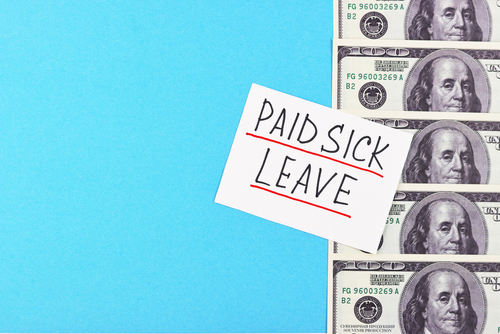 According to the United States Department of Labor’s Wage and Hour Division, the Families First Coronavirus Response Act addresses how select businesses must give their workers paid sick leave or expanded family and medical leave under permitted circumstances in light of COVID-19.
 As the economic impact of COVID-19 lingers and an impending second wave is on everyone’s mind, Congress is already thinking of new legislation to stimulate the economy. One of the ideas on the top of the list is an expansion of the Research and Development (R&D) tax credit as part of the next COVID-19 relief bill.